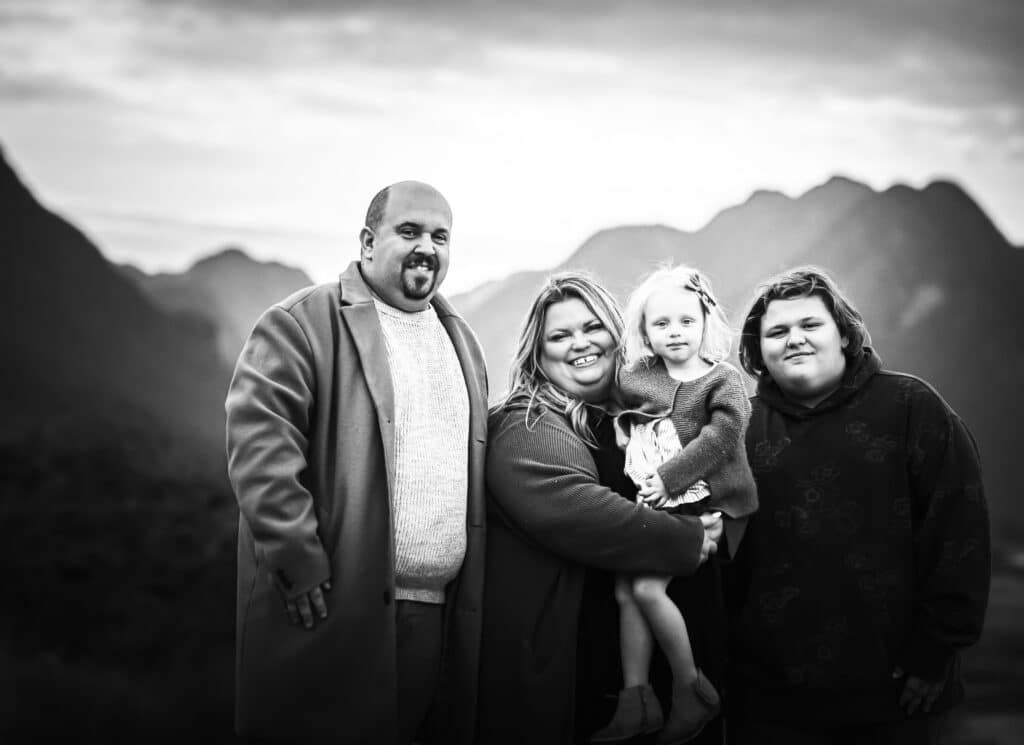
When the Simpsons began thinking about building a family, adoption was simply one of the meaningful ways they imagined becoming parents. Here, they share their experience with international adoption and what they’ve learned along the way.
What made you decide that adoption was right for your family?
Adoption was always an option for us. There was never a hierarchy between building a family biologically or through adoption. We believed that however our family came to be, it would be the right way.
It had always been in the back of my mind, so I reached out to Sunrise Family Services and quietly started the process. I thought, I’m just going to have this option ready, just in case.
Around the same time, my husband went to a screening put on by a group raising awareness about child soldiers in Africa. He came home deeply moved and said, “We have to adopt. How do we get started?” I told him, “Well… I’ve already sent in the initial paperwork. We just have to say yes.” He said, “OK. Yes. This is it.”
That’s really how it began. In different ways, we were already being led toward adoption.
What was your experience with international adoption?
Slow. Very slow.
You can’t simply choose any country you want to adopt from. Agencies have relationships with specific countries, and those are the options available. We first opened a profile with Kenya, and after a couple of years with no progress, we started wondering what our next step should be. We knew the process would take time, but at that point, it felt like we weren’t moving forward at all.
When Canada’s laws changed, we were able to open a second profile in the United States, which brought new hope, but delays continued there as well. Then Sunrise told us about Lesotho. To move forward, we had to close one of our existing profiles, so we closed the US file. By then, we had already been waiting four years. Years filled with emotional highs and lows.
We submitted our paperwork to Lesotho in October 2010, and by December, we had been matched. I got a call at work saying, “You’ve been matched,” and after waiting so long, I almost couldn’t take it in. It didn’t feel real at first.
We had always been open to a sibling group, and that’s what made this match possible. Lesotho had a sibling pair waiting (a rare situation in international adoption) and asked if we wanted to move forward. Of course we did.
Our children were two and five at the time of matching, and three and six when they came home in August 2011.
Can you tell us about one high point in your adoption experience?
One of my favourite moments was about 18 or 20 months after the kids came home. There was a day when we realized we weren’t an “adoptive family” anymore, we were just family. That feeling was so meaningful after years of paperwork, waiting, and adjusting.
There was a day when we realized we weren’t an “adoptive family” anymore, we were just family.
Also, someone once told us we had “saved” our children. My husband immediately corrected them: “We didn’t save them. They allowed us to make a family.” And that’s exactly how we feel. We were given the wonderful opportunity to raise our children and become a family together.
And one challenging point?
I wish there had been more honest conversations about the hard parts of adoption. Topics like trauma, attachment, behaviour, and grief are touched on in classes, but the reality is much more complex.
I don’t believe agencies or organizations intentionally avoid the hard conversations; it’s simply human nature to focus on the hopeful parts of building a family. But when families aren’t fully prepared, they can be left vulnerable.
When prospective parents ask me for advice, I’m very candid. I believe adoption is a beautiful way to make a family, but you shouldn’t go into it unaware of the hard parts. People should enter adoption with open eyes.
What are some ways you have tried to maintain a cultural connection with your children’s birth culture?
We’ve tried to honour our children’s birth culture in different ways. We have books in Sesotho, Basotho hats, art, and clothing from Lesotho. We celebrated Lesotho Day, and when the kids were younger, they even shared short presentations about Lesotho with our family at reunions.
At the same time, we’ve always followed their lead. My daughter chose to stop speaking Sesotho early on. She helped her brother communicate when he needed it, but she preferred to speak English. While some families choose to travel back to their child’s birth country, that hasn’t been something our kids have wanted to do, and we’ve respected that.
For many years, I sent photo books and notes to their great aunt in Lesotho to keep that connection open. Eventually, another relative reached out. One of my children wasn’t interested in connecting, while the other was open to it. There’s no right or wrong here. It’s their choice to make.
Has the Belonging Network played a role in your journey?
Yes. I started following the Belonging Network back when you were the Adoptive Families Association of BC, around 2008, and signed up for the magazines and newsletters. I read every recommendation, every story, and anything else I could learn from.
We were also connected to a local group of families who adopted from Lesotho, many of whom lived across the Lower Mainland and Interior.
A little more about the Simpson family
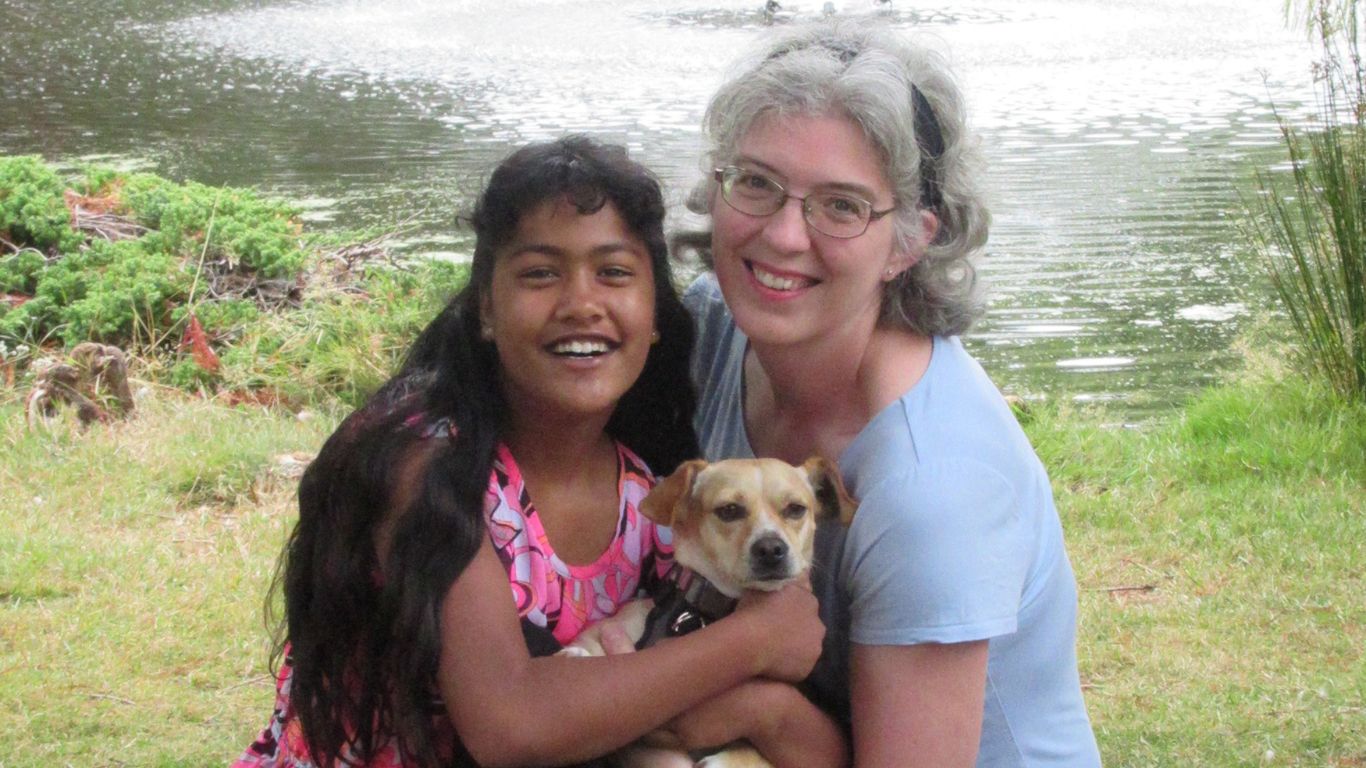
They won second place in our 2025 This is Belonging photo contest, receiving a wonderful camera prize generously donated by Broadway Camera. Here is their winning photo:

The story behind the lovely dog in their photo
When our children first arrived, they were afraid of animals. In their early lives, dogs were kept outdoors and used as guard animals, so they didn’t feel safe around them. Our Labradors, however, were gentle and trained using hand signals, which helped our kids slowly feel more comfortable. Learning how to give commands gave them a sense of control and confidence, and over time, that helped build trust and connection.
Later, we became volunteer puppy raisers for PADS (Pacific Assistance Dogs Society). We raised a puppy named Roku [the doggie in the picture] for about 21 months before he moved on to advanced service dog training. Some of our favourite family photos are the silly ones where Roku refused to pose. He brought so much joy to our home.
Got a favourite family photo? Consider entering our This is Belonging photo contest next year. Follow us on Instagram and Facebook to find out when the next photo contest opens.